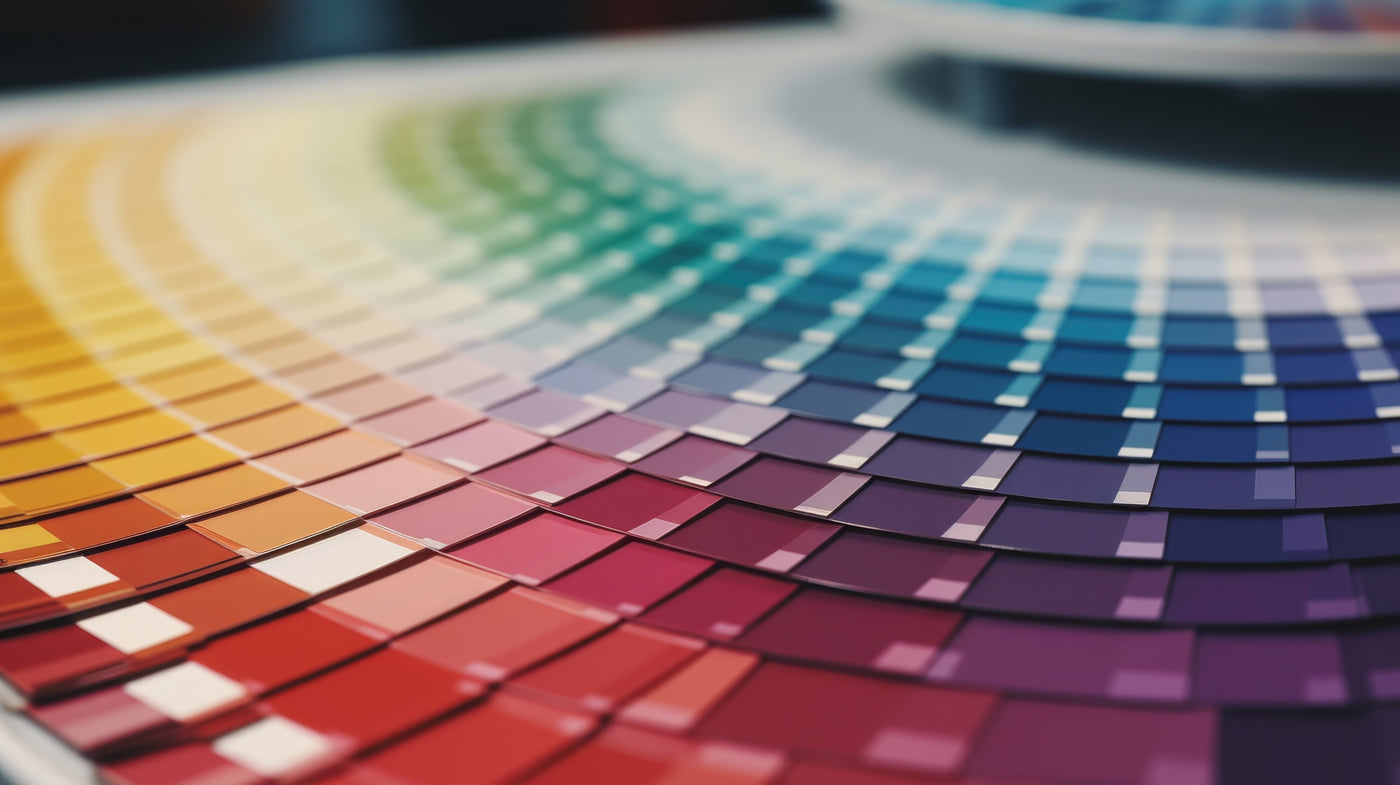
Converting Screen Based Colors into Paint Colors
Can you truly convert a code for a screen based colors (e.g., Hexidecimal, RGB) into a code for a paint color (e.g., Pantone)?
The short answer is: Not with 100% accuracy. While you can find "closest matches," a true 1:1 conversion between digital light (Hex/RGB) and physical pigment (Pantone/Paint) is technically impossible due to how these colors are created.
Here’s why these conversions are estimates versus exact copies.
1. The Additive vs. Subtractive Gap
The primary hurdle is that digital screens and physical paints operate on entirely different physics.
- RGB (Red, Green, Blue): This is additive color. It is created by light shining directly into your eyes. When you mix all three at full strength, you get white.
- Pantone/Paint: This is subtractive color. It relies on pigments that absorb certain wavelengths of light and reflect others. When you mix these pigments, you eventually get a dark, muddy brown or black.
Because of this, many vibrant "electric" colors you see on a screen—like a neon cyan or a deep, glowing violet—simply cannot be replicated with physical ink or paint. They fall "out of gamut."
2. The Role of Light and Substrate
When you look at a Hex code on a screen, the brightness is consistent based on your monitor settings. When you look at a Pantone chip or a wall painted in a specific color, the coloration changes based on:
- The Light Source: A color looks different under warm incandescent bulbs vs. cool daylight (a phenomenon called metamerism).
- The Texture: A matte paint will look "lighter" than a glossy paint of the same color because of how light bounces off the surface.
- The Material: Pantone colors are calibrated for specific papers (Coated vs. Uncoated), and paint reacts differently to drywall than it does to wood or metal.
3. How Reliable are Online Converters?
Most online tools use mathematical approximations to find the "nearest neighbor" in a color library.
These can be trusted maybe 70-80% of the time as they find the closest match, but won't account for "neon" or "metallic" digital glows.
Best Practices for "Accurate" Results
If you are trying to match a digital brand color to a physical space or product, follow these steps to minimize errors:
- Use a Physical Swatch: Never trust your screen for the final decision. Physical Pantone fan decks or paint chips are the only way to see the "true" color.
- Check the Gamut: Use professional software like Adobe Illustrator to see if your RGB color is "out of gamut" for printing.
- The "Middle Man" Method: Convert your Hex/RGB to a Lab color space first. L∗a∗b∗ is a device-independent color model based on human vision and is often used by color scientists to bridge the gap between digital and physical.
Pro Tip: If you're looking for a paint match for a specific brand color, many high-end paint stores have "spectrophotometers." You can bring in a physical sample (like a printed logo), and they can scan it to create a custom chemical mix that is much more accurate than a digital conversion tool.